How does a poplar tree become a 3 mm plywood sheet?
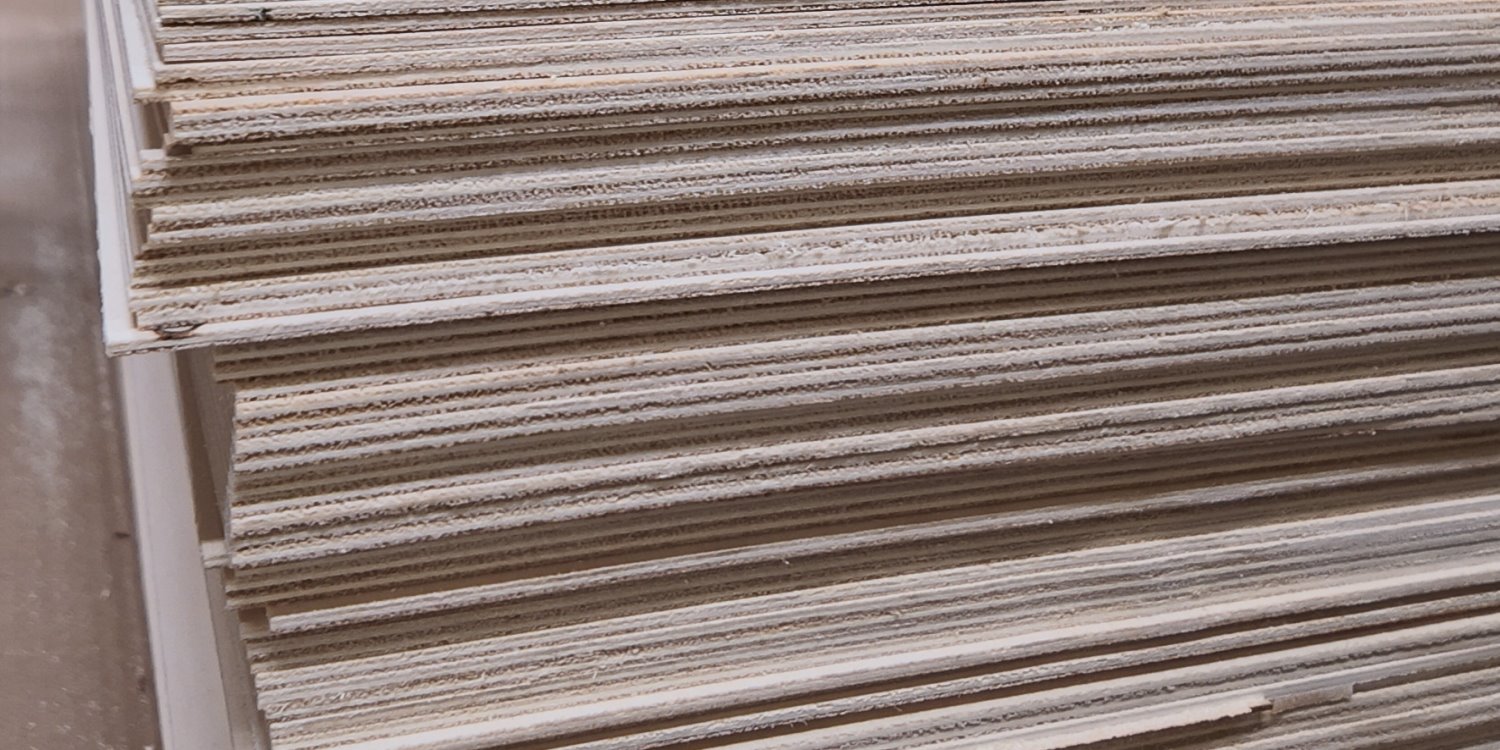
You're holding a thin wooden sheet. It's pale and surprisingly light. Even so, it feels sturdy despite being so thin. On the surface you can see a fine grain. At the edge, several thin layers sit on top of each other. So how does a tree turn into something this even?
By the end of this post you'll know the main steps. They run from the poplar on the plantation, through the peeling machine and the hot press, to the finished 3 mm sheet. You'll also know how poplar plywood differs from birch plywood.
The poplar: a tree in a hurry
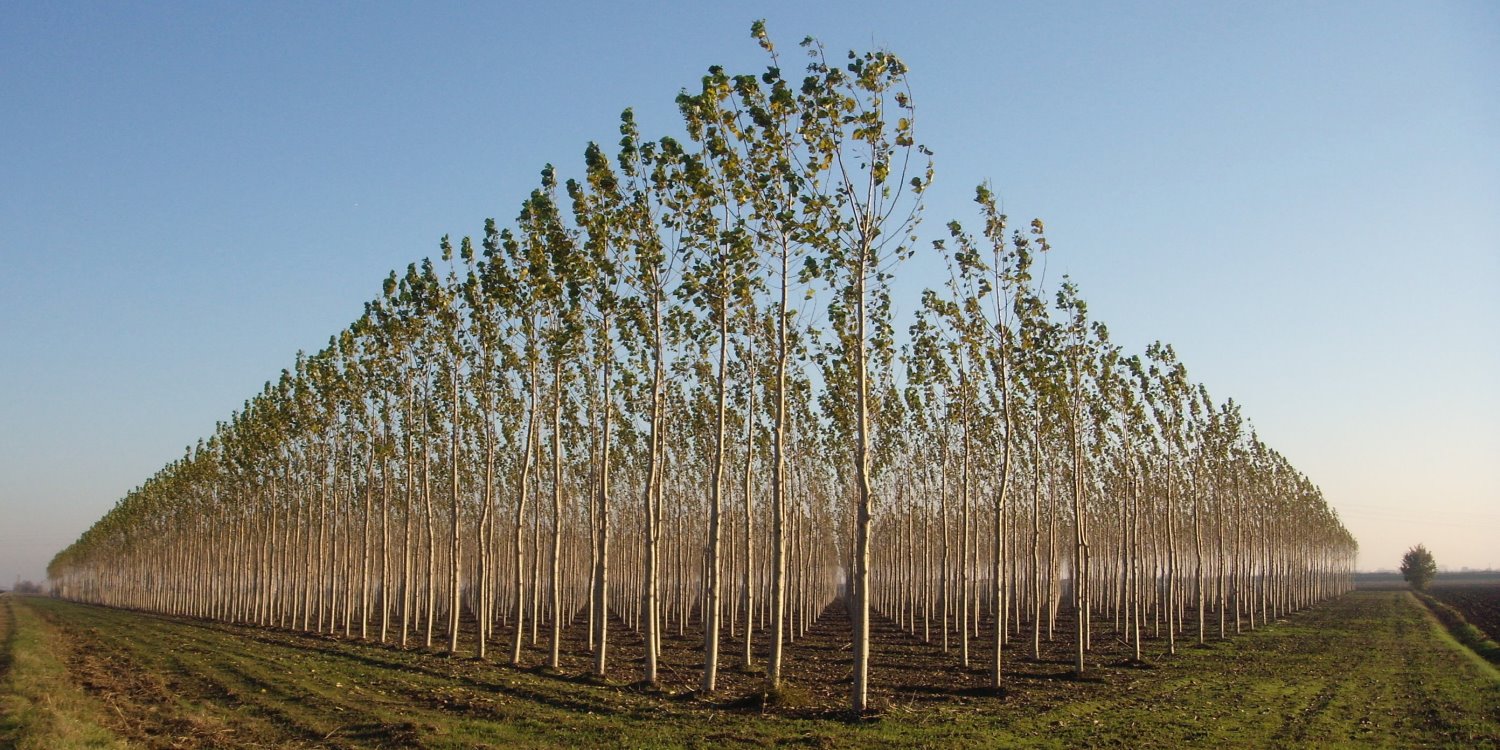
European poplar plywood production often uses wood from purpose-planted poplar plantations. These use selected clones, including fast-growing hybrid poplars. Such hybrids come from crossing different poplar species. For timber production, fast growth, straight trunks and suitable wood quality matter, among other things.
What makes poplars especially interesting is how fast they grow. On suitable sites, certain poplar plantations can supply wood for veneer production after just ten to fifteen years or so. How long it takes depends on the variety, the site and the care, among other things.
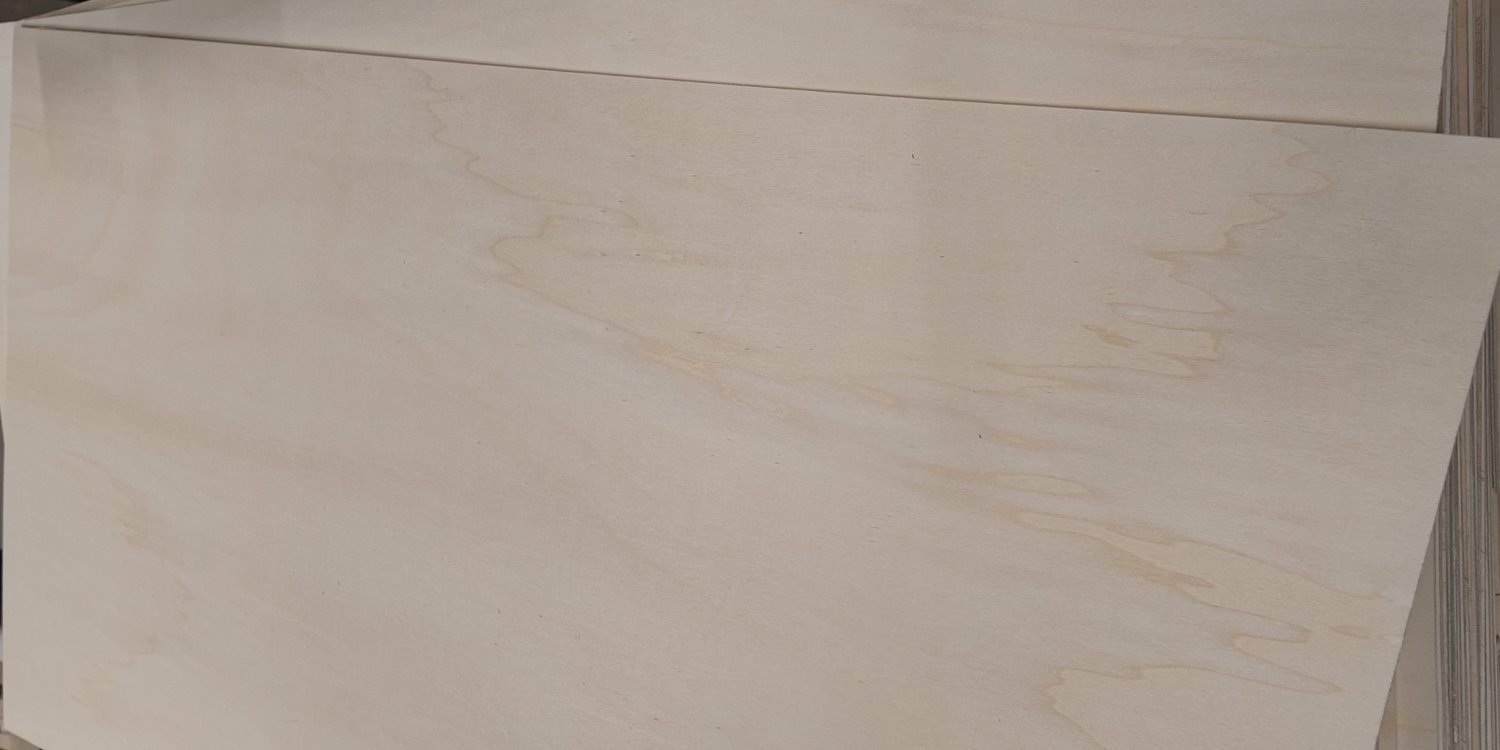
The wood itself is soft, light and usually very pale, ranging from creamy white to a soft yellow. It works well for making thin peeled veneers – the starting layer for poplar plywood.
Where poplars grow and what they need
Poplars for plywood often grow on specially planted plantations. Some also grow in agricultural cropping systems. On a classic peeler-log plantation, the trees stand in rows several metres apart. This gives the crowns enough light. The trunks also have room to grow in diameter. Major European growing regions include the Po Valley in northern Italy, as well as France and Spain.
Planting from cuttings
Poplars for timber are often propagated vegetatively, meaning from plant parts rather than seeds. Selected parent plants give rise to new plants with the same genetic traits. Depending on the method, peeler-log plantations use longer sets or young plants already raised in a nursery.
Plants of the same clone share the same genetic basis. Even so, they don't grow exactly alike. Soil, water supply and care affect how each tree develops and what wood quality it later delivers.
Soil, water and light
Many poplars grown for timber do especially well on deep, well-aerated soils with enough water and plenty of light. River plains often offer good conditions for this. What matters most is the specific site, though. A good water supply is not the same as permanently waterlogged, oxygen-poor soil.
While the trees are getting established, competing vegetation is cut back where needed. This helps the young trees take hold. They don't have to share water and nutrients equally with grasses and other plants.
Care and pruning
One important step is called pruning. The lower side branches are removed over several rounds. In certain peeler-log systems, this gradually prepares a trunk section of about five to seven metres.
The reason: branches leave knots in the wood. If they are removed early and the cuts heal over well, the trunk can keep growing with fewer knots on top. This improves the conditions for good-quality veneers. Knots already inside the trunk don't disappear through pruning, though.
Ten to fifteen years of growth
Suitable poplar plantations can be harvested after about ten to fifteen years. In especially favourable locations, shorter periods are possible too. There is no fixed harvest date. What counts includes the trunk diameter reached, the wood quality and the requirements of the processing mill.
The trees are felled, delimbed and divided into log sections. For veneer production, these are later cut to the required peeling length. If the land is to stay in use as a peeler-log plantation, new planting follows.
From log to veneer
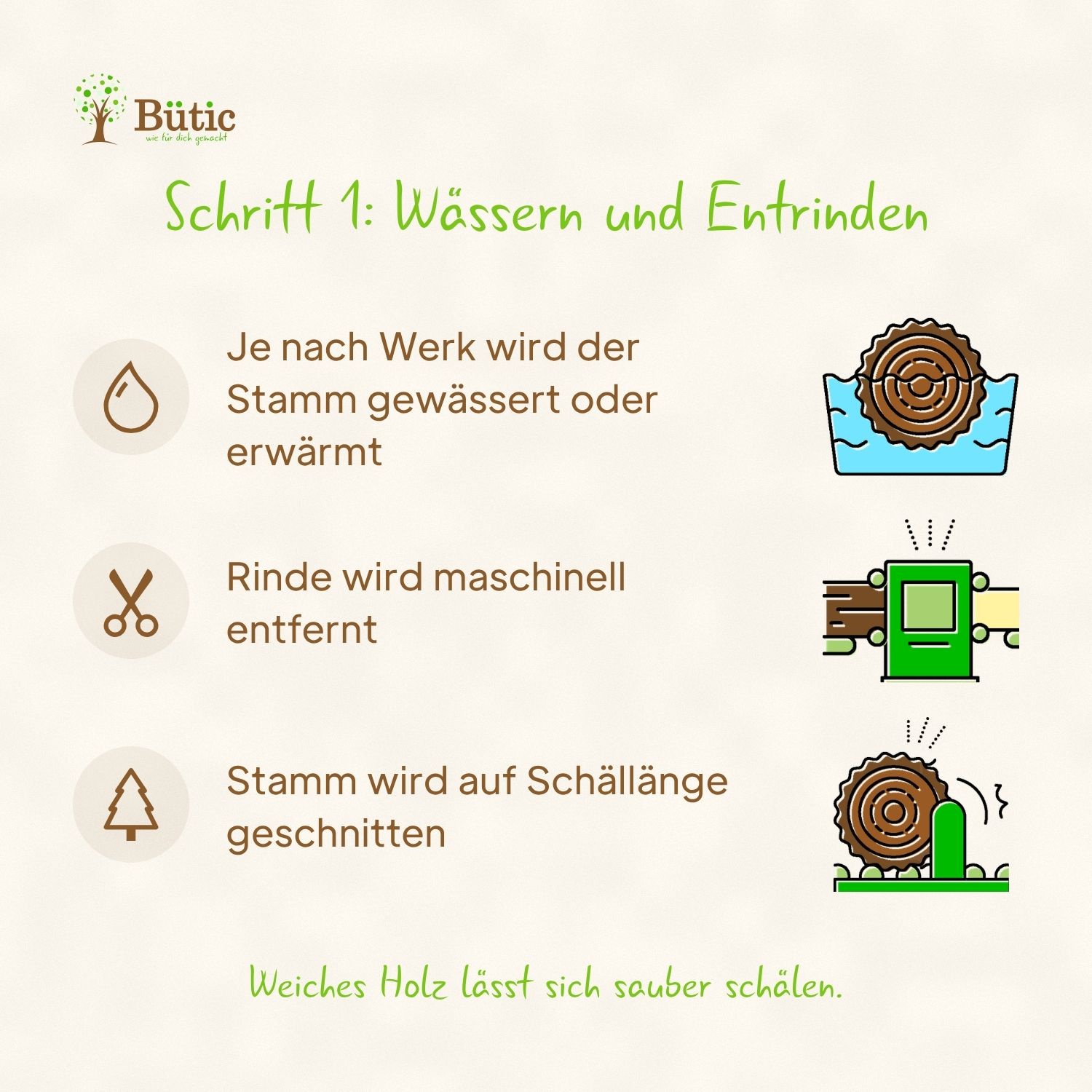
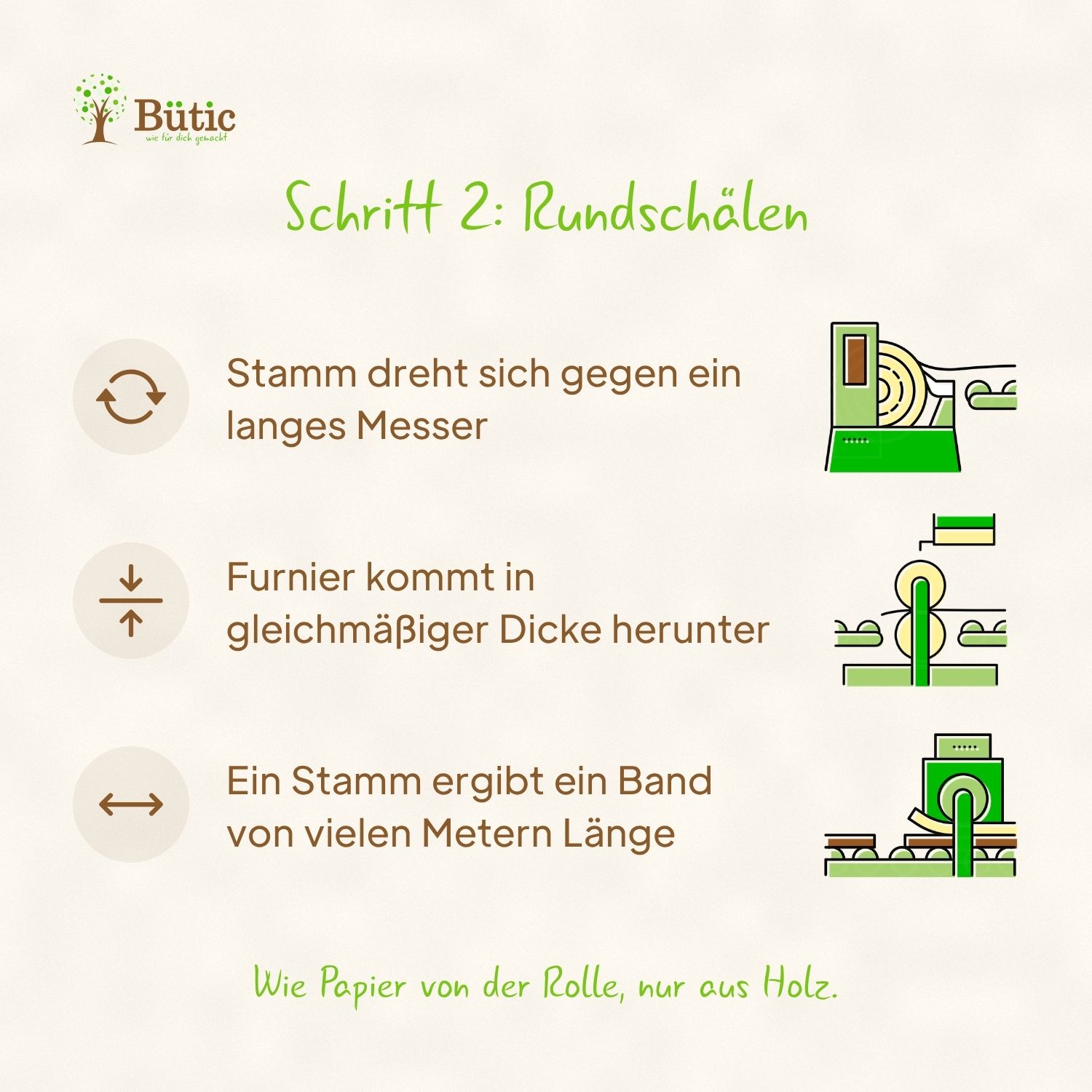
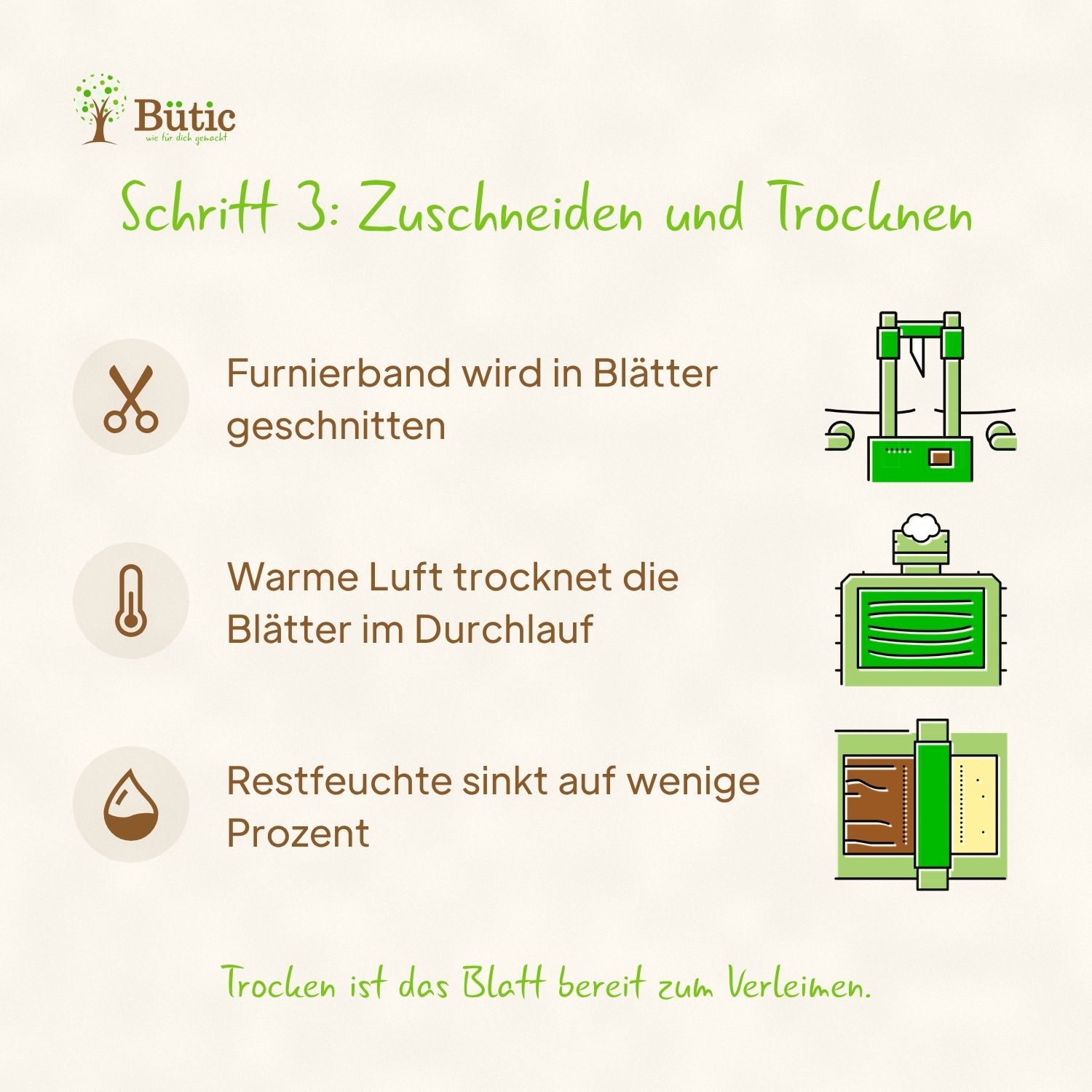
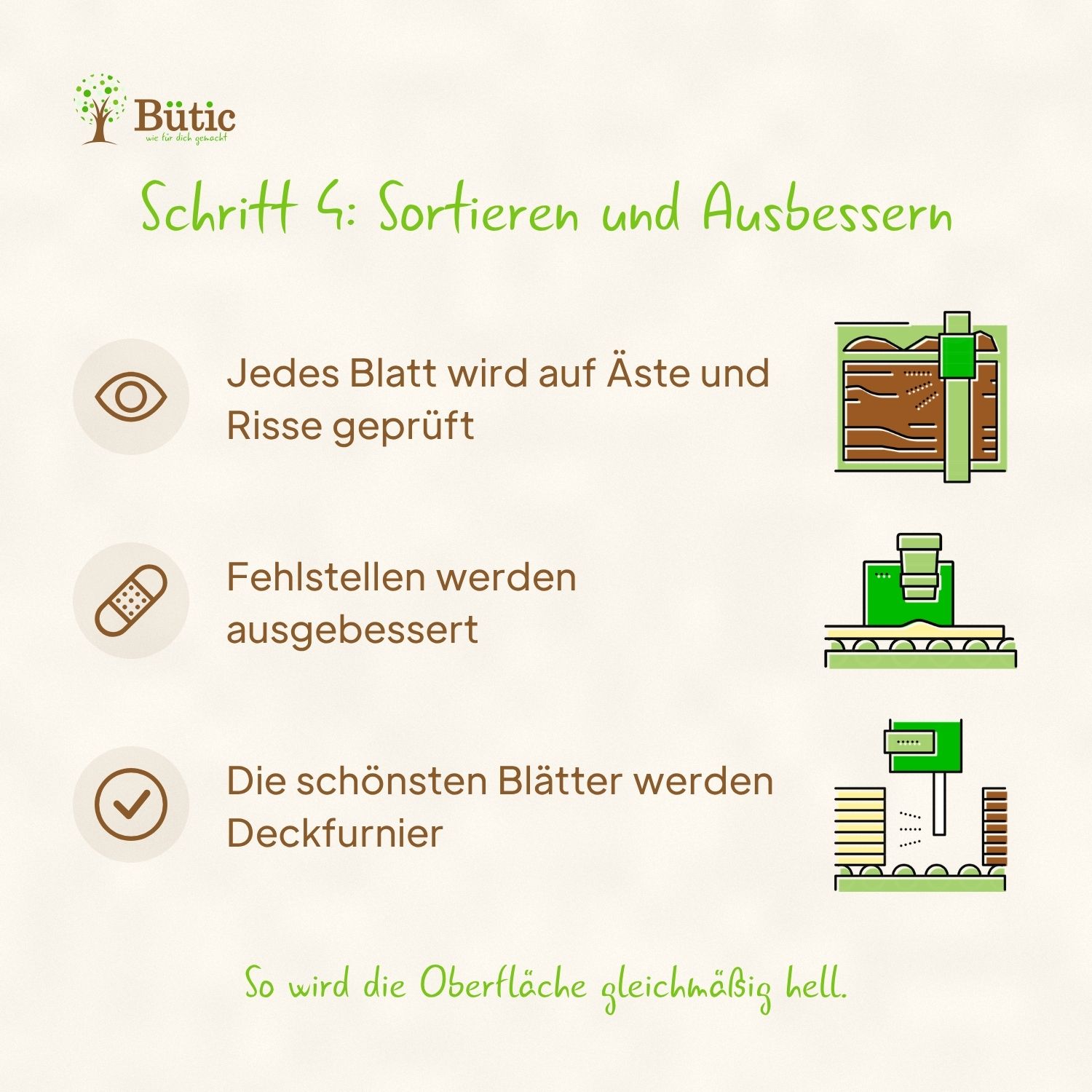
At the mill, the round log becomes a thin, flat sheet of wood. The exact process varies by mill and board type. The main steps are similar, though.
From veneer to sheet
Now the dried veneer sheets are ready. Their exact thickness depends on the planned board build-up. A single veneer is thin and reacts to changes in humidity. Plywood only gets its special properties from what happens next.
The sheets are laid on top of each other crosswise. In a three-ply sheet, the grain of the middle layer runs across the two outer layers. Wood moves mainly across the grain. It swells and shrinks much more in that direction than along it. Gluing the layers crosswise means they hold each other back in these movements. This makes the sheet more dimensionally stable. That is the idea behind the German word for plywood, Sperrholz: the layers lock each other in place.
Glue goes between the layers, applied with rollers, for example. The veneer stack is then bonded in a hot press under pressure and heat until the glue has cured. Temperature and pressing time depend on the glue system and the board build-up.
After pressing and cooling, the sheets are edge-trimmed and cut to size. Depending on the grade, the surfaces are also sanded. Quality checks accompany production and the final sorting.
Why 3 mm is made of three layers
Thin poplar plywood with a nominal thickness of 3 mm is often three-ply. Two face veneers enclose a middle layer running crosswise to them. The individual veneers don't have to be the same thickness. So a total thickness of 3 mm doesn't automatically mean three 1 mm veneers.
A build-up that is as symmetrical as possible helps balance out stresses. But it doesn't guarantee the sheet will stay perfectly flat under all conditions. Plywood reacts to humidity too. So before you work with it, let it adjust to the room climate.
How moisture-resistant a sheet is depends on its bonding and its intended use, among other things. A water-resistant bond doesn't make the wood itself waterproof. The bonding classes under EN 314-2 and the use classes under EN 636 help classify these properties.
The glue system used and the formaldehyde emission are also specific to each product. You can't tell them from the name “poplar plywood” alone. So for a specific use, the details for the particular sheet are what count. This matters most when moisture or outdoor use is expected.
Poplar and birch compared
Poplar and birch are two types of wood used to make plywood. The basic manufacturing principle is similar. But the wood and the resulting sheets differ. The figures below are a guide. Density, stiffness and surface quality also depend on the specific board build-up.
| Property | Poplar plywood | Birch plywood |
|---|---|---|
| Density, approximate | approx. 400–500 kg/m³, depending on the sheet | approx. 680 kg/m³ as a guide value, varies by sheet |
| Colour | usually creamy white to pale yellow | usually pale, sometimes with a yellowish to reddish tone |
| Hardness of the wood | soft, dents fairly easily | harder and more resistant to dents |
| Stiffness at comparable thickness and grade | lower; often used for lightweight applications | usually higher; actual suitability depends on build-up and application |
| Surface | depends on veneer quality, defects and sanding | also depends on veneer quality, defects and sanding |
| Growing & harvest | a good ten to fifteen years until harvest | several decades |
More on how the materials differ and which wood suits which job: Plywood, HDF, cardboard or felt.
From log to our laser
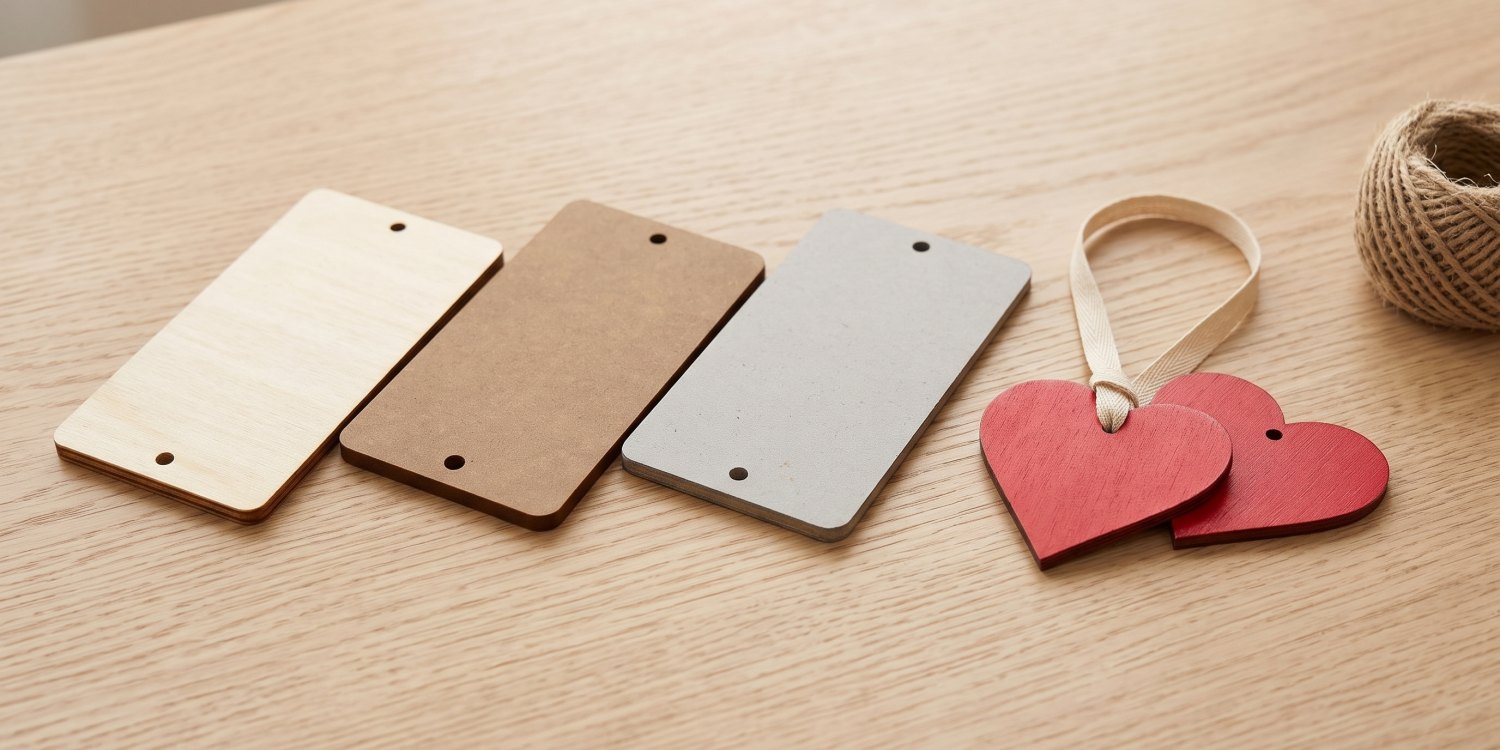
Our poplar plywood arrives as 3 mm sheets and goes into the laser. It becomes light cutouts, shapes and fine details. The pale wood surface is the base for whatever you make next.
You'll find the material's properties and tips for working with it on our poplar plywood page Poplar plywood.
Summary
Behind a 3 mm poplar plywood sheet lie years of growth, peeling the log, drying the veneers and pressing the layers. On suitable poplar plantations, the tree can supply the wood after about ten to fifteen years. Depending on the site and management, it can be sooner or later.
Only crosswise gluing turns single thin veneers into a fairly dimensionally stable sheet. How it is built up and what it suits depends on its specific grade. Next time you hold a sheet like this, its edge will tell you part of this story.